
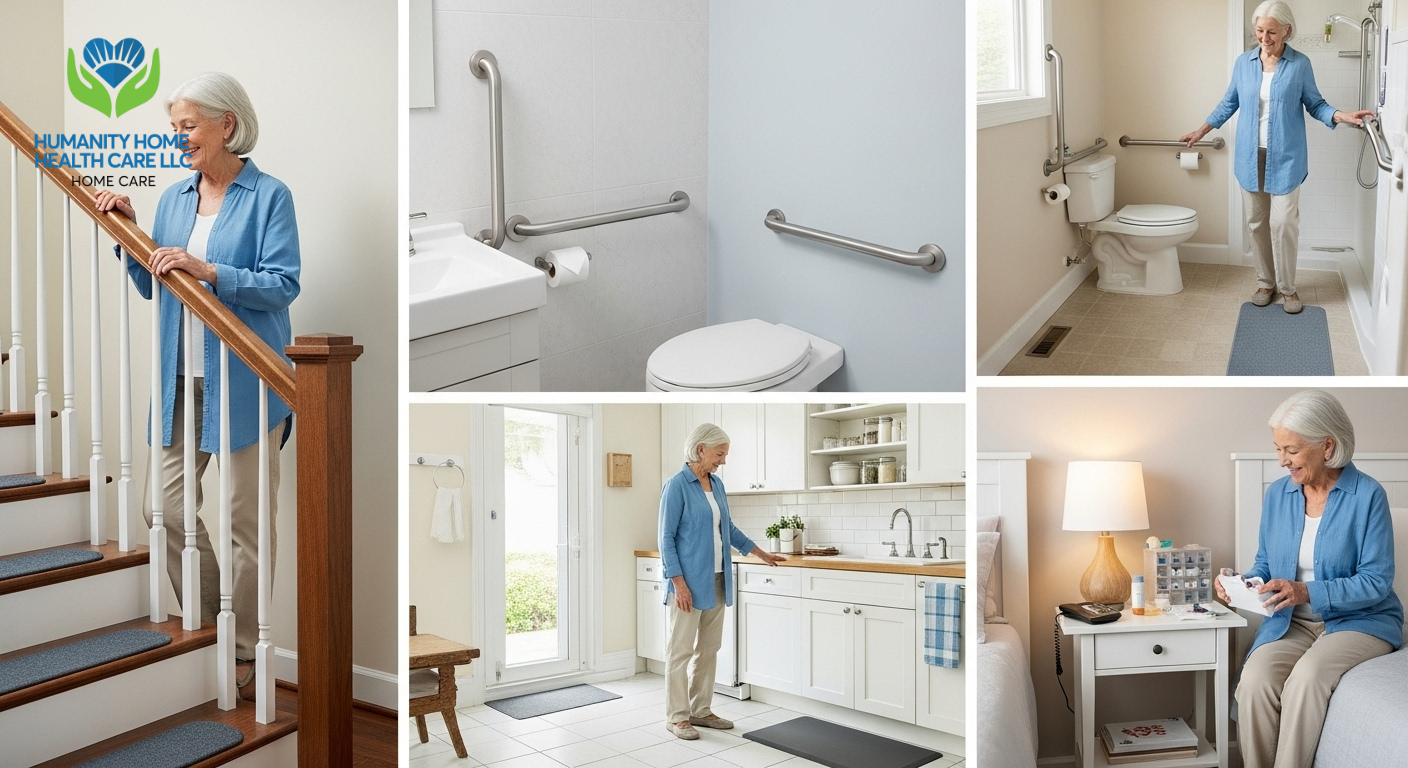
Ensuring aging at home safety is essential for seniors who wish to maintain independence while reducing risks. By following practical senior home safety tips, families can create a secure and comfortable environment. Proper planning, home modifications, and awareness of potential hazards play a crucial role in maintaining elderly safety at home.
How Home Safety Protects Aging Adults
Senior home safety tips are more than simple precautions; they directly affect the well-being of aging adults. Falls are a leading cause of injuries among seniors, making fall prevention for seniors a critical concern. Simple adjustments, like removing clutter and installing grab bars, enhance senior mobility safety and support overall aging at home safety.
Creating a safe environment not only prevents accidents but also fosters confidence and independence in seniors. Families can use structured resources like aging at home safety to implement tailored strategies for different living spaces.
Making the Home Safer and Easier for Seniors
Investing in home modifications for seniors significantly reduces risks while promoting comfort. Simple changes, such as raised toilet seats, lever-style door handles, and non-slip mats, can prevent common injuries. Regularly updating home modifications for seniors ensures evolving needs are met, improving senior mobility safety.
To maintain comprehensive safety, families can refer to a home safety checklist seniors. This checklist should cover items like functional smoke detectors, organized medications, clear walkways, and accessible emergency contacts. By using these strategies, preventing senior injuries becomes more achievable.
Fall Prevention for Seniors
Fall prevention for seniors requires a multifaceted approach. Proper lighting is crucial to avoid trips and falls. Installing motion-sensor lights in hallways and bathrooms, along with arranging furniture for clear pathways, enhances senior mobility safety.
Technology also supports aging at home safety. Wearables, medical alert systems, and smart home sensors monitor activity and provide instant alerts in case of emergencies. Families may explore professional support through home healthcare Stafford VA, for trained caregivers who assist with mobility and emergency response.
Managing Medications and Monitoring Senior Health
Medication errors can increase the risk of falls and other injuries. Seniors taking multiple prescriptions may experience dizziness or confusion. Using pill organizers, reminders, or professional guidance helps in preventing senior injuries. Families can utilize resources like medication reminders prevent health risks to ensure safety while maintaining independence.
By managing medications correctly, seniors can follow senior home safety tips effectively and support long-term elderly safety at home.
Supporting Emotional Health and Social Connection
Maintaining emotional well-being is integral to aging at home safety. Loneliness can affect attention and increase the risk of accidents. Professional services like companionship care for seniors offer social interaction while supporting senior mobility safety and mental health.
In addition to emotional care, families should encourage physical activity. Exercise programs tailored to seniors enhance balance, reduce risks, and contribute to effective fall prevention for seniors.
Professional Support and Senior Care Services
Families can complement home safety strategies with professional support. Services like senior care Fredericksburg Virginia provide trained caregivers who assist with daily activities, mobility, and emergency preparedness. These services reinforce home modifications for seniors and help in preventing senior injuries, ensuring comprehensive elderly safety at home.
By combining personal precautions with professional guidance, families can fully address aging at home safety while maintaining the dignity and independence of seniors.
Maintaining a Safe Home Environment
Integrating all safety strategies into daily routines ensures long-term senior home safety tips. Regularly reviewing a home safety checklist seniors, updating home modifications, and providing consistent supervision strengthen senior mobility safety.
Families should remember that fall prevention for seniors, emotional support, and proactive health monitoring are all interconnected. Implementing these practices protects seniors and promotes a secure, comfortable home environment.
Conclusion
Ensuring aging at home safety requires a combination of practical strategies, thoughtful home modifications for seniors, and consistent attention to senior mobility safety. Implementing senior home safety tips such as proper lighting, clutter-free pathways, and grab bars can significantly reduce risks. Professional support from services like Humanity Home Healthcare LLC further enhances elderly safety at home while promoting independence. Regularly using a home safety checklist seniors and monitoring health, medications, and emotional well-being supports fall prevention for seniors and overall preventing senior injuries, ensuring seniors enjoy a secure and comfortable home environment.
FAQs
What are the most common safety risks at home for seniors?
Common risks include falls, tripping over clutter, poor lighting, and medication errors. Other hazards, such as slippery bathroom floors or unsecured stairs, can compromise elderly safety at home if not addressed.
How can families reduce fall risks for aging adults?
Families can reduce fall risks by installing grab bars, improving lighting, and removing tripping hazards. Maintaining a home safety checklist seniors and implementing home modifications for seniors helps in effective fall prevention for seniors.
When should home safety modifications be considered?
Home safety modifications should be considered when seniors experience mobility changes, chronic illnesses, or age-related difficulties. Early planning improves aging at home safety and supports long-term senior mobility safety.