Managing medicines safely at home requires structure, awareness, and consistency. Whether someone is recovering from surgery or managing a chronic illness, proper medication management reduces risks and improves treatment outcomes. Small mistakes like skipped doses or incorrect timing can create serious health concerns, which is why families must build reliable systems to support daily routines.
One of the most important aspects of safe care is understanding the full process of management of medication. This includes organizing prescriptions, following dosage instructions carefully, and maintaining open communication with healthcare providers. When systems are clear and consistent, medication safety at home becomes easier to maintain.
Building a Strong Medication Routine
Creating a routine is the foundation of effective medication management. Many patients are placed on structured schedules, including a 4 times a day medication schedule, which requires careful planning. Without reminders, it becomes easy to forget a dose.
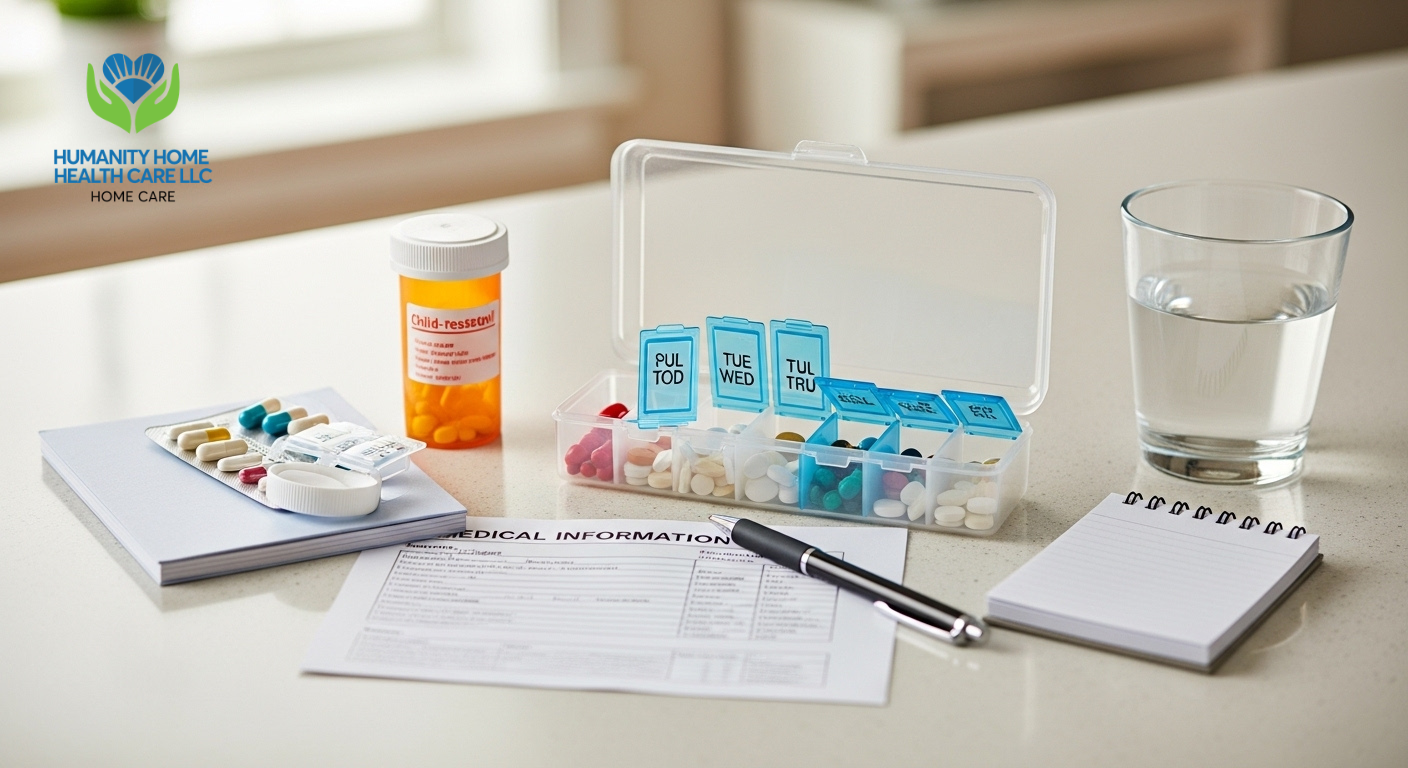
Using pill organizers and written logs are practical medication management tips that simplify daily care. These tools improve consistency and reduce confusion, especially when multiple prescription medicines are involved. Organized prescription management allows families to monitor changes and prevent duplication.
For older adults, senior medication management becomes even more essential. Age-related changes in metabolism can affect how the body processes medication. Families can review helpful guidance on supporting older adults through senior medication management to better understand daily responsibilities.
Understanding How to Take Medicine Correctly
Knowing how to take medicine correctly is just as important as remembering to take it. Some medications must be taken with food, while others require an empty stomach. Learning how to take medicine correctly prevents side effects and improves effectiveness.
Clear medication education for patients helps individuals understand their treatment plan. Patients should know the purpose of each medication, expected results, and potential warning signs. Strong medication education for patients also supports long-term adherence.
In many cases, families find it helpful to review medication instructions alongside professional guidance. Resources that explain dosage reminders and safety strategies, such as those related to medication management tips, can strengthen routines and prevent missed doses.
Organizing Prescriptions and Preventing Errors
Proper prescription management plays a central role in safe care. Keeping medications labeled, stored in a cool environment, and separated by time of day prevents confusion. Reviewing expiration dates monthly is another important part of effective management of medication.
Patients taking several prescription medicines should maintain an updated medication list to share with healthcare providers. This ensures accuracy and prevents harmful interactions. Maintaining clear records strengthens medication safety at home and reduces stress for caregivers.
Families supporting older adults may also benefit from understanding broader care strategies that reinforce independence and daily safety, such as medication safety at home, which emphasizes how proper storage and organization reduce preventable risks.
Managing Complex Schedules
A 4 times a day medication schedule requires discipline and planning. Setting alarms or linking doses to routine activities such as meals can improve compliance. These structured habits strengthen overall medication management.
For households overseeing senior medication management, weekly reviews help confirm that instructions have not changed. Clear prescription management avoids accidental overdosing or missed adjustments.
Families sometimes notice signs that a loved one is struggling with daily routines. Recognizing early warning indicators discussed in prescription management resources can help prevent complications before they arise.
The Role of Education and Communication
Ongoing medication education for patients ensures long-term success. When patients understand their care plan, they are more likely to follow instructions and practice safe habits. Learning how to take medicine correctly builds independence and reduces reliance on emergency care.
Open communication between patients, caregivers, and healthcare professionals strengthens medication management systems. Reviewing prescription medicines during appointments ensures that outdated prescriptions are removed and new ones are clearly explained.
Some families benefit from broader support services that reinforce safe home care practices. Resources that outline overall care strategies, such as those connected to the management of medication, can provide valuable clarity for caregivers balancing multiple responsibilities.
Conclusion
Safe and effective medication management requires planning, education, and consistent review. From organizing prescription medicines to following a 4 times a day medication schedule, every detail matters. Families seeking structured support can rely on Humanity Home Healthcare LLC to better understand safe medication routines and daily oversight. Strengthening senior medication management, applying reliable medication management tips, and improving prescription management systems all contribute to better health outcomes. By prioritizing medication safety at home, practicing careful management of medication, and reinforcing medication education for patients, families can confidently support loved ones and maintain stability in daily care routines.
FAQs
What do you educate patients on medication?
Education focuses on proper dosage, timing, storage, and recognizing side effects. Clear medication education for patients includes teaching how to take medicine correctly, reviewing prescription medicines, and reinforcing safe medication management practices to maintain medication safety at home.
What are the 7 important details that must be on the prescription?
The prescription must include the patient’s name, medication name, dosage strength, route of administration, frequency, such as a 4 times a day medication schedule, prescriber’s details, and the issue date. Accurate prescription management ensures safe management of medication and the correct use of prescription medicines.
The 7 medication administration guidelines include:
The right patient, right medication, right dose, right time, right route, right documentation, and right reason. Following these principles strengthens medication management, improves medication safety at home, supports senior medication management, and ensures responsible use of prescription medicines.